How to Audit Clean Backlinks
Every topic covered on this site contributes to one larger goal: building a website that earns trust, authority, and sustainable organic visibility. For the complete framework behind these strategies, read our Organic Authority Optimization Scaling Engine: Complete Guide 2026 before exploring this guide.
Over 74% of websites penalized by Google’s algorithm updates had one thing in common — low-quality, manipulative backlinks from link farms and private blog networks. Most site owners discover this fact only after their organic traffic nosedives. If you haven’t audited your backlink profile recently, you may already be sitting on a ticking SEO time bomb.
Understanding how to audit clean backlinks isn’t optional anymore. It’s the difference between sustainable rankings and a Google penalty that strips months of hard work in a single algorithm update. This guide breaks down exactly how spammy link networks operate, how to identify them, and how to permanently remove their damage from your site.
—
Table of Contents
- What Are Spammy Link Networks?
- Why Toxic Backlinks Destroy SEO Rankings
- How to Audit Clean Backlinks: Step-by-Step
- Red Flags That Signal a Spammy Link Source
- Free Tools vs. Paid Tools for Backlink Auditing
- How to Disavow and Recover From Toxic Links
- Building a Clean, Future-Proof Link Profile
- —
1. What Are Spammy Link Networks?
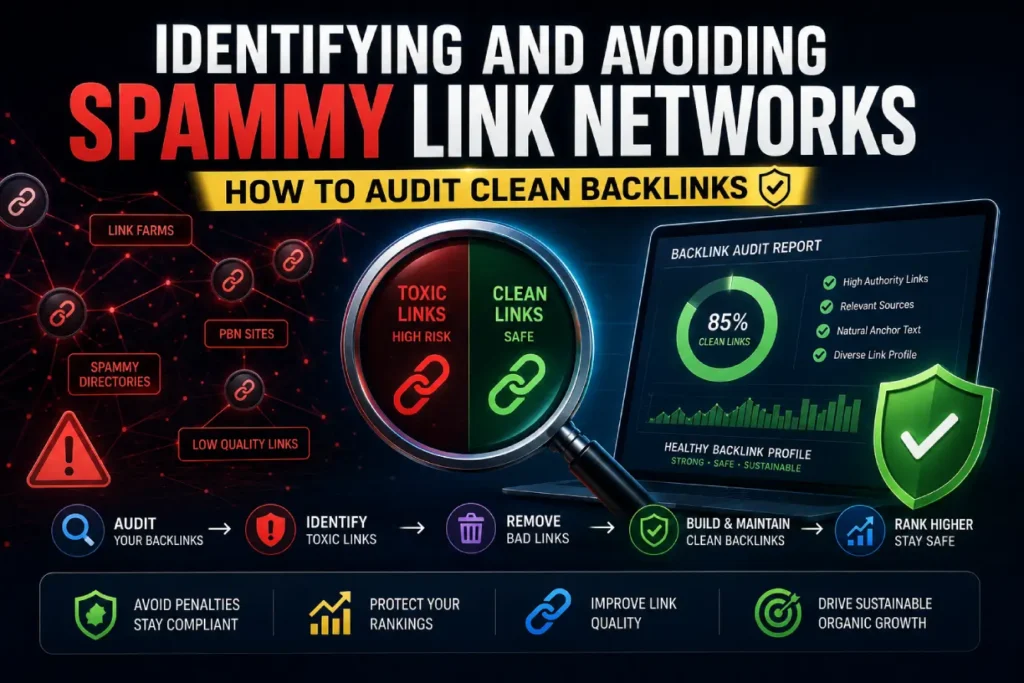
Spammy link networks are clusters of websites designed specifically to manipulate search engine rankings by artificially inflating a site’s backlink count. These aren’t independent blogs that genuinely reference your content. They’re coordinated systems — often called Private Blog Networks (PBNs) — built to game Google’s PageRank algorithm.
Here’s the thing most people believe: more backlinks always equals better rankings. But that logic breaks down fast when Google’s SpamBrain detects unnatural link patterns. A single link from a well-respected site like Forbes or HubSpot outweighs 500 links from low-authority, irrelevant domains.
Real examples of spammy link sources include footer links on unrelated foreign-language websites, comment spam on abandoned WordPress blogs, and mass-published articles on free subdomain hosts like Blogspot farms. So recognizing these sources early protects your entire domain authority investment.
Many websites struggle with this exact challenge. Our Niche Edits vs Guest Post: The Winning Link Building Strategy for 2026 explains how to overcome it using proven strategies that align with Google’s best practices.
—
2. Why Toxic Backlinks Destroy SEO Rankings
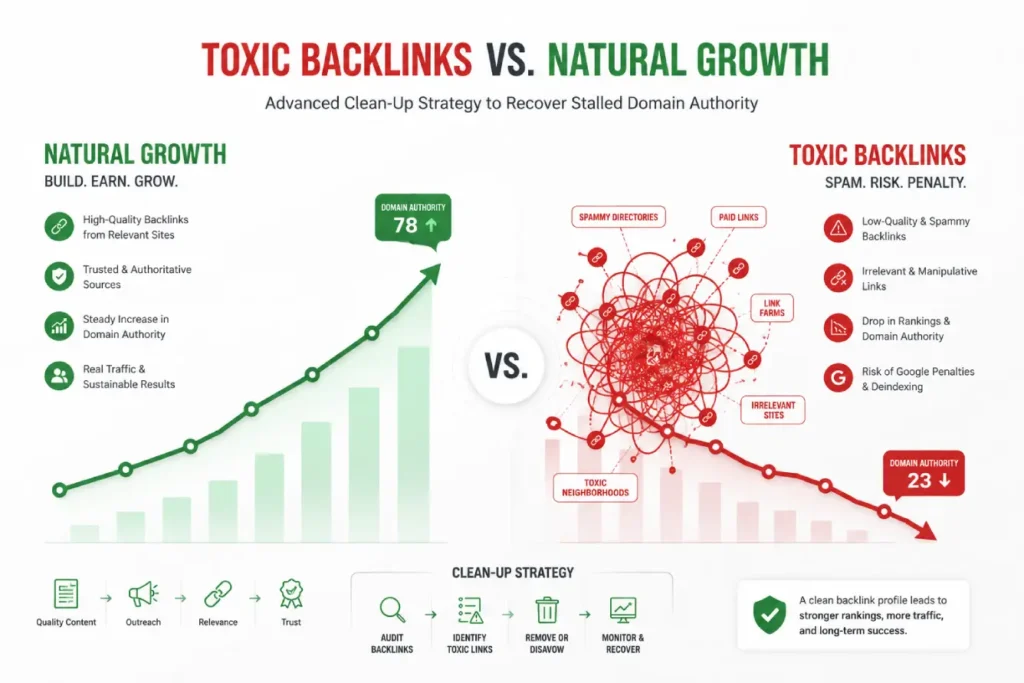
Can one bad link really destroy your site’s rankings? Not usually. But a pattern of toxic backlinks absolutely can — and Google’s Penguin algorithm update, now part of its core algorithm, actively devalues or penalizes sites with manipulative link profiles.
A study by Ahrefs found that 66.5% of pages have zero backlinks, and among those that do build links, nearly 30% unknowingly carry toxic or low-quality links. The damage compounds over time. Low-trust links signal to Google that your site may be gaming the system, which reduces your overall Authority Optimization score and suppresses rankings across your entire domain.
SaaS companies and e-commerce stores are particularly vulnerable because they often outsource link building to cheap services that use PBNs or link exchanges. And once those patterns are in your backlink profile, they’re your problem — not your contractor’s.
—
3. How to Audit Clean Backlinks: Step-by-Step
Learning how to audit clean backlinks starts with gathering complete data — not just a surface-level snapshot.
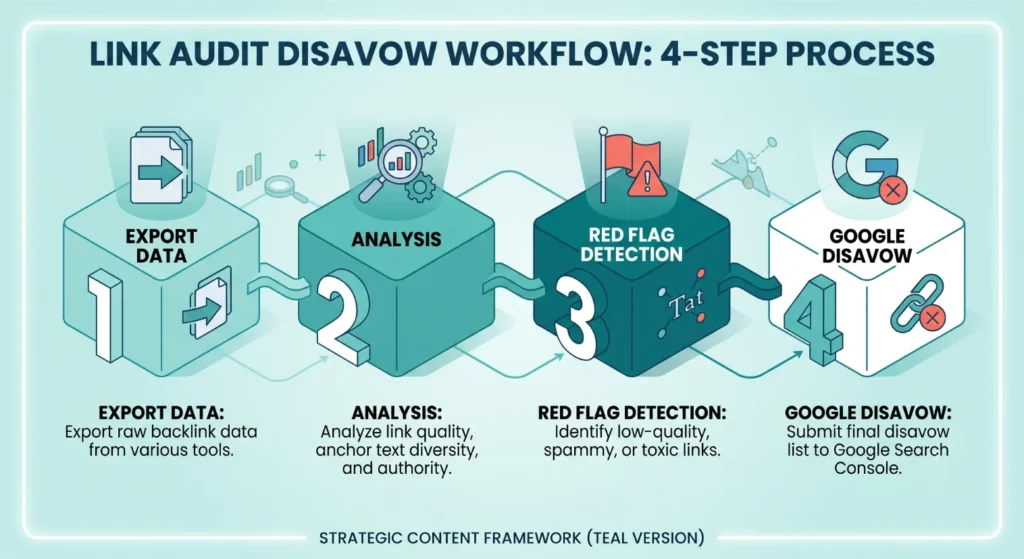
Step 1: Export Your Full Backlink Profile
Use tools like Google Search Console (free), Ahrefs, or SEMrush to export every domain linking to your site. Look for domains you don’t recognize, especially those with generic names like “best-seo-blog247.com.”
Step 2: Analyze Domain Authority and Relevance
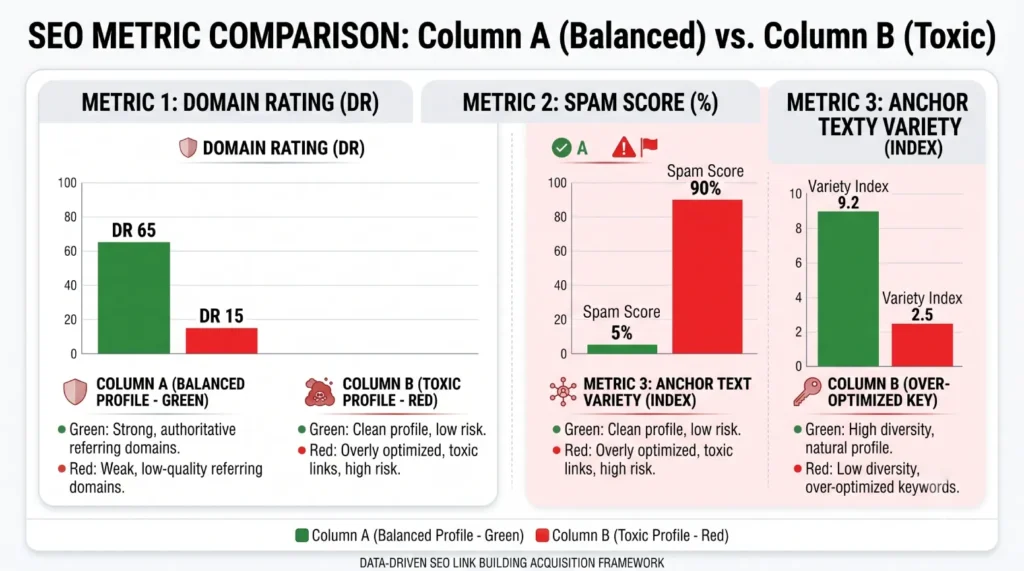
A link from a sports betting site pointing to your SaaS product page isn’t just irrelevant — it’s a red flag for algorithmic penalties. Check domain rating (DR), spam score (Moz), and topical relevance for every linking domain.
Step 3: Cross-Reference With a free backlinks checker
Tools like Ubersuggest and Google Search Console’s Link Report let you verify your backlink data without spending a dollar. Comparing two tools reduces blind spots and catches links other tools miss.
Step 4: Flag and Categorize Toxic Links
Sort flagged links into three buckets — disavow, monitor, or keep. Don’t rush to disavow everything that looks unusual; some links from old directories or minor blogs are harmless.
If you’d rather have experts handle this process for you, our Safe Link Velocity Rules for New Websites | Link Building Guide provides a proven, white-hat approach designed to deliver sustainable long-term results.
—
4. Red Flags That Signal a Spammy Link Source
Not every toxic link is obvious. Some spammy link networks look professional on the surface — they have real articles, decent design, and even some traffic.
Watch for these warning signs:
Exact-match anchor text overload — If dozens of sites link to you using the exact phrase “best accounting software,” that’s unnatural and suspicious.
Links from identical IP clusters — PBNs often run multiple domains from the same server.
Links from irrelevant geographic markets — A Vancouver-based B2B SaaS company shouldn’t have 80% of its links from Indonesian or Eastern European low-quality directories.
Doing a proper competitor backlink analysis often reveals who in your space is also being targeted by negative SEO campaigns or using shady link-building tactics themselves.
—
5. Free Tools vs. Paid Tools for Backlink Auditing
Should you invest in a paid tool? For small blogs, maybe not. But for SaaS marketers and e-commerce operators managing domains worth significant revenue, a $99/month Ahrefs or SEMrush subscription often pays for itself within the first recovered ranking.
Free options like Google Search Console, Ubersuggest’s free backlinks checker, and Neil Patel’s backlink audit tool offer solid starting points. They’re limited in historical data and link volume, though.
Paid platforms show lost and gained link trends over time, which is critical for spotting sudden spammy link injections — a classic negative SEO tactic competitors use against ranking sites.
Combine both approaches. Use free tools weekly for monitoring and paid tools quarterly for deep audits.
This is only one part of a successful SEO strategy. For a deeper understanding, read our Competitor Backlink Gap Analysis | Find & Win Hidden Link Opportunities, which explains the complete process in detail.
—
6. How to Disavow and Recover From Toxic Links
Google’s Disavow Tool is powerful — and easy to misuse. Disavowing good links can actually hurt rankings more than the toxic links you were trying to remove.
Only disavow links after you’ve first sent manual removal requests to the linking domain’s webmaster. Document every outreach attempt. Then upload a properly formatted disavow file through Google Search Console, using “domain:spammysite.com” format to block all links from a domain.
Recovery typically takes 4 to 12 weeks depending on your crawl frequency and the scale of toxicity. Be patient. And don’t repeat the link-building practices that caused the issue.
—
7. Building a Clean, Future-Proof Link Profile
The best defense against spammy link networks is building a backlink profile so strong that toxic links become irrelevant noise. That means earning links from high-authority, topically relevant domains through strategies like digital PR, original research, and genuine niche edits vs guest post placements.
Affiliate asset owners should pay particular attention to link velocity — gaining 200 links in one week after months of zero activity looks highly unnatural to Google. Sustainable link building mirrors organic growth patterns. Spread your acquisition across different content types, link sources, and time periods.
Protect What You’ve Built
Spammy link networks are more sophisticated than ever. They’re designed to blend in — and they’re designed to get your site penalized while their operators walk away clean.
The three key takeaways from this guide:
Regularly audit your backlink profile — quarterly at minimum, monthly if you’re actively building links.
- Use data from multiple tools to cross-validate toxic link signals before taking action.
- Invest in ethical, high-authority link building that compounds over time instead of creating liability.
Knowing how to audit clean backlinks is only half the battle. The other half is building a link profile that Google respects and competitors can’t easily attack. Don’t leave your domain authority to chance.
For businesses that want to improve rankings without relying on risky tactics, our Modern Anchor Text Optimization Blueprint | Rank Smarter in 2026 offers a structured framework based on sustainable SEO practices.
Order our Premium Link Building Service Now: (Get Now) let our team build clean, contextual backlinks that grow your authority the right way — no shortcuts, no penalties.
Every optimization you make today contributes to stronger rankings tomorrow. Keep learning, refining your strategy, and building a healthier search presence.
FAQ
Q: What is the fastest way to identify toxic backlinks?
A: The fastest method is running your domain through Ahrefs, SEMrush, or Moz’s Link Explorer and sorting results by spam score. Look for domains with high spam scores, irrelevant niches, or suspiciously generic names. Cross-reference results with Google Search Console for a complete picture.
Q: Is a backlink audit free with Google Search Console?
A: Yes. Google Search Console’s Links Report shows all domains linking to your site at no cost. It doesn’t provide spam scores or domain authority metrics, but it’s a solid starting point for identifying unfamiliar or suspicious referring domains before investing in paid tools.
Q: How often should I audit my backlinks?
A: Most SEO professionals recommend a full backlink audit every 90 days. If you’re actively building links or have previously been penalized, monthly audits are safer. E-commerce stores during peak seasons like Black Friday should audit more frequently due to increased traffic and competitor activity.
Q: Can I recover from a Google penalty caused by toxic backlinks?
A: Yes, recovery is possible but takes time. Start by sending webmaster outreach requests to remove toxic links, then submit a disavow file through Google Search Console. Recovery typically takes 4 to 12 weeks after your next algorithm update or crawl cycle.
Q: What’s the difference between a PBN link and a legitimate guest post link?
A: A PBN link comes from a website created purely to pass link juice — it has thin content, no real audience, and often sits on an expired domain with residual authority. A legitimate guest post appears on an active, editorially managed publication with real readership, original content, and topical relevance to your site.