Modern Anchor Text Optimization
Herry launched his SaaS tool in 2022 with big dreams and a bigger content budget. He published guest posts, built links, and watched his domain authority climb. Then one Tuesday morning, his organic traffic dropped 40% overnight. No algorithm announcement. No manual action notice. Just silence — and a spreadsheet full of exact-match anchor texts pointing to his homepage like a broken compass.
That story isn’t unique. Thousands of founders, affiliate asset owners, and e-commerce operators have walked the same painful road. Anchor text optimization is the invisible engine behind sustainable SEO rankings — and most people get it wrong until it costs them everything.
This blueprint changes that. You’ll learn how to build anchor profiles that Google trusts, competitors can’t replicate, and search engines reward consistently.
Table of Contents
- Why Anchor Text Strategy Breaks or Builds Rankings
- Understanding the Anatomy of a Healthy Anchor Profile
- The Anchor Text Optimization Framework That Works
- Internal Anchor Text Engineering Done Right
- Competitor Research — Learning From Their Wins and Mistakes
- Avoiding Penalties While Scaling Link Campaigns
- Turning Your Anchor Strategy Into a Long-Term Asset
Why Anchor Text Strategy Breaks or Builds Rankings
Herry’s problem wasn’t link quality. His links were genuinely earned. The problem was pattern — every link said the same thing in the same way.
Google’s Penguin algorithm, first rolled out in 2012 and now baked into the core ranking system, specifically targets manipulative anchor text patterns. Studies by Ahrefs show that over-optimized exact-match anchors appear in the profiles of 67% of sites that experience sudden ranking drops. That’s not a coincidence.
What does a healthy anchor text examples look like? Think of it as a conversation. Some people introduce you by your full name. Others call you by a nickname. Some just say “this guy”. Natural diversity signals authenticity.
An anchor text engineering approach treats every link as a deliberate brand signal — not just a ranking shortcut. So why do so many smart marketers still mass-publish exact-match anchors? Because it worked in 2015 and old habits are stubborn.
The lesson: strategy matters more than volume.
Many websites struggle with this exact challenge. Our Safe Link Velocity Rules for New Websites | Link Building Guide explains how to overcome it using proven strategies that align with Google’s best practices.
Understanding the Anatomy of a Healthy Anchor Profile
Picture an anchor profile like a portfolio. You wouldn’t put 100% of your investment into one asset. Same principle applies here.
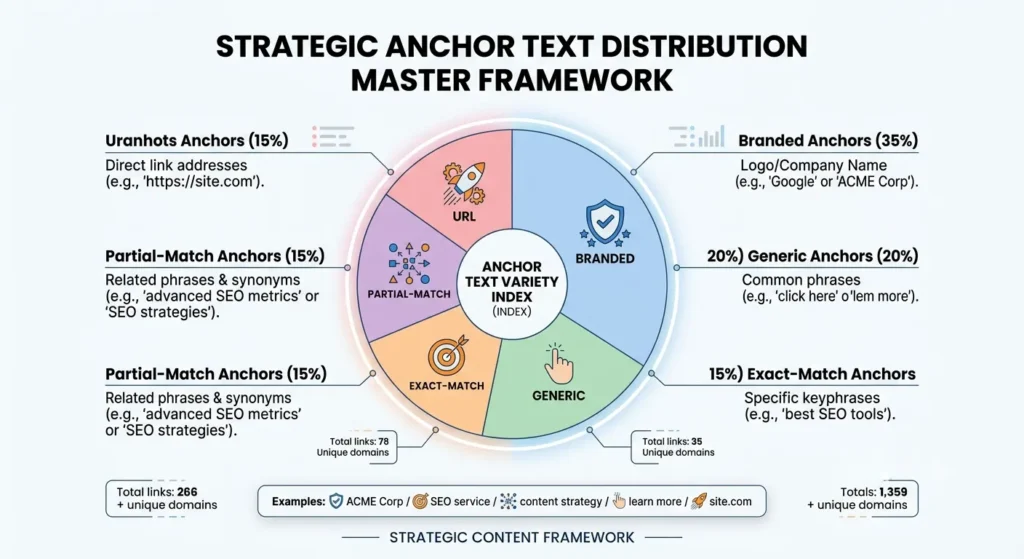
A well-distributed profile typically contains branded anchors (your company name), naked URLs, generic anchors (“click here,” “learn more”), partial-match anchors, and LSI variations. According to a 2023 Semrush study, top-ranking pages in competitive industries maintain exact-match anchor ratios below 10% of their total backlink profile.
Sarah, head of growth at a mid-size e-commerce brand in Germany, reversed a six-month traffic decline simply by diversifying away from product-keyword anchors. She added branded and topical variations over 90 days. Rankings recovered. Revenue followed.
Balance isn’t boring — it’s the backbone of lasting authority. Can you afford to ignore the data Sarah and countless others have validated?
A successful backlink strategy doesn’t end with earning links—it depends on Anchor Text Optimization that reflects a natural and balanced link profile. Effective Anchor Text Optimization ensures that search engines understand your website’s relevance without interpreting your backlink profile as manipulative or over-optimized.
Rather than relying heavily on exact-match keywords, Anchor Text Optimization should include a healthy mix of branded anchors, naked URLs, generic phrases, partial-match keywords, and contextually relevant variations. This diversity helps build trust while strengthening topical authority across your most important pages.
The Anchor Text Optimization Framework That Works
Here’s where theory becomes action. Effective anchor text optimization follows a deliberate sequence — not a spray-and-pray approach.
Step one: audit your existing profile. Use tools like Ahrefs or Majestic to map every anchor currently pointing to your domain. Group them by type and flag over-concentration.
Step two: set target ratios. A reasonable starting point — 30% branded, 25% URL/naked, 20% generic, 15% partial-match, 10% exact-match. Adjust based on your niche and competition level.
Step three: build with intent. Every new link acquisition should consciously fill a gap in your ratio targets. And this means briefing your outreach team accordingly.
Matching Anchors to Page Intent
Product pages deserve partial-match and exact-match anchors more than blog posts do. A homepage should lean heavily on branded and URL anchors. Match the anchor to the page’s commercial intent, and you’ll see faster keyword movement with lower risk.
If you’d rather have experts handle this process for you, our Identifying and Avoiding Spammy Link Networks | How to Audit Clean BacklinksYour Page Title provides a proven, white-hat approach designed to deliver sustainable long-term results.
Internal Anchor Text Engineering Done Right
External links get all the glory. But internal links? They’re the unsung architects of site authority flow.
Anchor text engineering within your own site gives you full control — no outreach needed, no editorial gatekeeping. When you link from a high-traffic blog post to a target service page using a precise partial-match anchor, you’re passing topical relevance directly.
Tools like Screaming Frog help you audit internal anchor distribution across hundreds of pages in minutes. You’ll often find that high-authority pages are wasting link equity on irrelevant pages with generic anchors like “read more.”
Building Internal Link Clusters
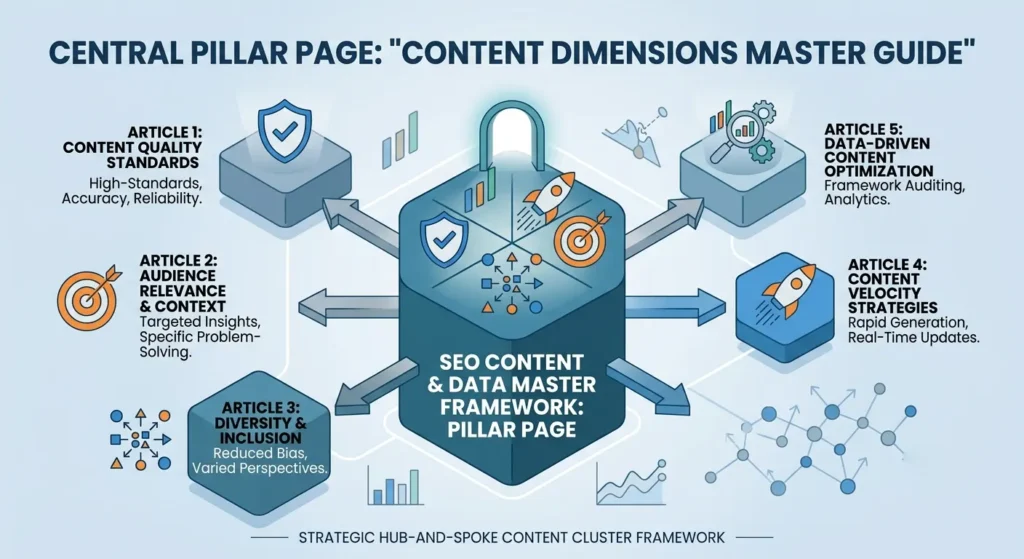
Group related content into topical clusters. Each cluster should have one pillar page receiving multiple internal links with descriptive, keyword-rich anchors. Supporting pages link back to the pillar with variations. This structure signals topical authority to Google — and it works faster than most external link-building tactics.
Competitor Research — Learning From Their Wins and Mistakes
Your competitors have already run the experiment. Why not use their data?
Running a competitor backlink analysis through Ahrefs or Moz reveals exactly which anchors are driving their top-ranking pages. You’ll see their ratio breakdowns, their highest-value referring domains, and sometimes their over-optimized weak spots.
One SaaS founder in Austin discovered his main competitor had 45% exact-match anchor concentration on their pricing page. He built a more natural profile targeting the same keyword — and outranked them within four months.
Competitor research isn’t copying. It’s informed strategy. What gaps exist in their profile that you could ethically fill?
For businesses that want to improve rankings without relying on risky tactics, our Competitor Backlink Gap Analysis | Find & Win Hidden Link Opportunities offers a structured framework based on sustainable SEO practices.
Avoiding Penalties While Scaling Link Campaigns
Speed kills — in link building as much as on highways.
Building 500 links in a month with similar anchors sends a manipulation signal that modern algorithms detect quickly. The smarter move combines niche edits vs guest posting approaches to create velocity that looks organic. Niche edits blend into existing content naturally. Guest posts add fresh editorial context. Together, they diversify your link-building footprint.
And you must audit clean backlinks regularly. Toxic links with aggressive anchors can drag down otherwise strong profiles. Disavow with precision — not panic.
The 90-Day Scaling Rule
Grow your anchor-diverse link profile by no more than 15-20% per month. This pace mirrors organic editorial link accumulation, which Google’s systems recognize as a trust signal. Patience here pays compounding dividends.
Turning Your Anchor Strategy Into a Long-Term Asset
Here’s Herry today. Eighteen months after that 40% traffic collapse, his SaaS tool ranks on page one for seven commercial keywords. His anchor profile now shows 28% branded, 22% URL, 18% generic, 17% partial-match, and 15% exact-match distribution.
He didn’t rebuild overnight. He rebuilt with intention.
Safe link building practices aren’t a limitation — they’re the foundation of an asset that compounds in value every year. The brands that win SEO in 2025 won’t be the ones with the most links. They’ll be the ones with the most trustworthy, strategically diverse anchor profiles.
Your anchor text strategy is either building authority or borrowing time. And borrowed time always runs out.
If you’re looking for a more detailed, step-by-step approach, our Niche Edits vs Guest Post: The Winning Link Building Strategy for 2026 guide covers everything you need to implement this strategy effectively.
Conclusion
Three takeaways define this blueprint. First, anchor text optimization requires ratio discipline — diversity isn’t optional, it’s survival. Second, internal linking amplifies external efforts when done with intent and precision. Third, competitive research gives you a tested map before you spend a single dollar on outreach.
Regular Anchor Text Optimization audits also reveal patterns that may limit your rankings. If a single keyword dominates your backlink profile, adjusting your anchor distribution can reduce optimization risks and improve long-term performance. As your website grows, Anchor Text Optimization should evolve alongside your content strategy and link acquisition efforts.
The goal of Anchor Text Optimization is not simply to increase keyword usage but to create a backlink profile that appears natural, relevant, and valuable to both users and search engines. Businesses that consistently review and refine their Anchor Text Optimization strategy are better positioned to achieve sustainable rankings, stronger domain authority, and consistent organic traffic while minimizing the risk of future algorithm updates.
Herry’s story ended in recovery and growth. Yours can start there.
The brands growing fastest in organic search right now treat every anchor like a strategic investment, not a convenience. They audit regularly, build diversely, and scale responsibly.
You have the blueprint. Now put it to work.
Order our Premium Link Building Service Now and let our team build an anchor strategy that earns rankings your competitors can’t replicate.
No SEO tactic delivers consistent results in isolation. Whether you’re improving content, earning backlinks, or strengthening topical relevance, every strategy works better when it’s part of a broader authority-building framework. For a complete roadmap, explore our Organic Authority Optimization Scaling Engine: Complete Guide 2026 before continuing.
FAQ
Q: What is anchor text optimisation, and why does it matter for SEO?
A: Anchor text optimization is the practice of strategically selecting and diversifying the clickable text used in backlinks pointing to your website. It matters because Google uses anchor text as a relevance and trust signal — poor distribution can trigger algorithmic penalties, while a balanced profile builds long-term authority.
Q: What’s the ideal anchor text ratio for a SaaS or e-commerce website?
A: A safe starting distribution is roughly 30% branded, 25% naked URL, 20% generic, 15% partial-match, and 10% exact-match. These ratios vary by industry competitiveness and should be adjusted after auditing your current profile against top-ranking competitors in your niche.
Q: How often should I audit my anchor text profile?
A: Audit your anchor profile at minimum every 90 days. If you’re running active link-building campaigns, monthly reviews help you catch over-concentration early before it triggers algorithmic red flags or manual reviews from Google.
Q: Can I fix an over-optimized anchor profile without starting over?
A: Yes. Begin by identifying your top offending anchor patterns using Ahrefs or Majestic. Then build new links with diverse anchor types to dilute the over-optimization ratio. In severe cases, use Google’s Disavow Tool to remove links from low-quality domains with manipulative anchors.
Q: What’s the difference between niche edits and guest posts for anchor strategy?
A: Niche edits insert your link into existing published content on aged pages, which often carry more authority. Guest posts create fresh editorial content with contextual links on new pages. Combining both approaches creates a diverse link-building footprint that looks natural to search algorithms and builds anchor variety efficiently.