Competitor Backlink Gap Analysis | Find & Win Hidden Link Opportunities
Every successful SEO strategy begins with building genuine authority rather than chasing shortcuts. Before diving into this topic, it’s worth understanding how a structured approach to Organic Authority Optimization Scaling Engine: Complete Guide 2026 creates the foundation for sustainable rankings, stronger backlink profiles, and long-term organic growth.
Marcus had built a solid SaaS product. Clean UI, strong customer feedback, competitive pricing. But his website sat on page three of Google while a scrappier competitor with half the features dominated page one. He tried everything — blog posts, social ads, cold outreach. Nothing moved the needle.
Then a friend handed him a piece of advice that changed everything:
“Stop guessing. Look at https://rankbost.com/authority-optimization-and-safe-link-building-guide/ for their backlinks.”
That single shift — moving from intuition to a data-driven competitor backlink analysis — turned Marcus’s traffic story around in under 90 days. He didn’t invent new tactics. He simply found where his competitors were winning link authority, and he went after those same sources with a smarter pitch. Using a proper competitor backlink checker tool gave him the map. This guide gives you the same blueprint.
Table of Contents
- What Is a Competitor Backlink Gap Analysis?
- Why the Gap Matters More Than Your Own Backlink Count
- How to Choose the Right Competitor Backlink Analysis Tool
- Step-by-Step: Running Your First Backlink Gap Analysis
- Turning Gap Data Into a Link Building Strategy
- Protecting Your Domain While You Build
- Conclusion: From Gap to Growth
1. What Is a Competitor Backlink Gap Analysis?
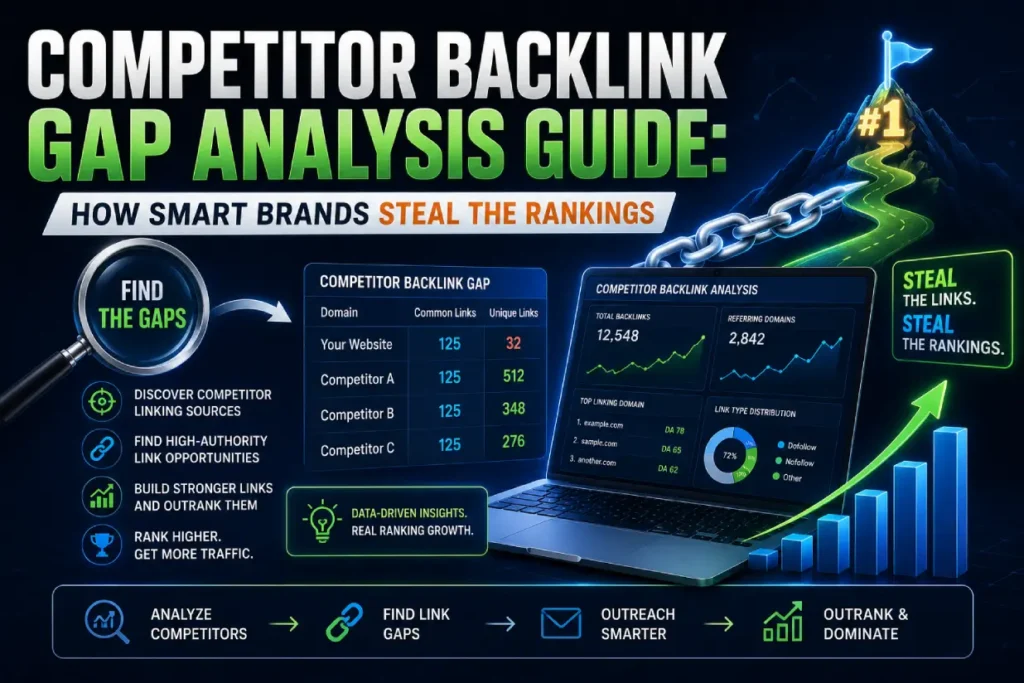
A backlink gap analysis identifies links your competitors have earned that your website hasn’t. Think of it like a talent audit — you discover which “recruits” (links) your rival signed before you and figure out how to sign similar ones yourself.
The process compares your backlink profile against one or more competitors using a competitor backlink analysis tool like Ahrefs, Semrush, or Moz. These platforms pull referring domain data, anchor text, and link authority scores simultaneously for multiple domains.
What you’re looking for are three specific gap types: sites that link to competitors but not you, sites that link to multiple rivals (indicating high likelihood of linking to you too), and high-authority domains your sector hasn’t fully tapped yet.
Real example: Shopify consistently outranks smaller e-commerce platforms partly because it has backlinks from over 900,000 referring domains. A new e-commerce SaaS studying that profile can identify tier-1 publishers, niche directories, and media outlets to target first.
Many websites struggle with this exact challenge. Our Niche Edits vs Guest Post: The Winning Link Building Strategy for 2026 explains how to overcome it using proven strategies that align with Google’s best practices.
2. Why the Gap Matters More Than Your Own Backlink Count
Here’s a question worth sitting with: Why do some websites with fewer total links still outrank sites with thousands?
The answer isn’t volume — it’s gap positioning. A brand that earns 50 highly relevant, niche-specific links from sites your competitors haven’t touched gains disproportionate ranking power. Relevance beats raw numbers almost every time.
According to Ahrefs’ 2023 data, 66.5% of pages have zero backlinks, meaning the competition for meaningful links is concentrated. Most businesses fight over the same 33% of linkable opportunities. Studying competitor backlink analysis data shifts you out of that crowd.
And the gap isn’t just about quantity. It’s about timing. Brands that identify unlinked opportunities early lock in editorial relationships before their competitors do. Being second to a great link source is expensive. Being first is almost free.
A successful SEO strategy isn’t measured by how many backlinks you have—it’s measured by whether you’re earning the right backlinks compared to your competitors. This is where backlink gap analysis becomes one of the most valuable tools in modern SEO. Instead of focusing solely on your own backlink profile, a backlink gap analysis reveals authoritative websites that link to your competitors but not to you.
By performing regular backlink gap analysis, businesses can uncover missed opportunities, identify trusted industry publications, and prioritize outreach efforts that deliver the greatest SEO impact. More importantly, backlink gap analysis helps you understand which links are driving your competitors’ rankings, allowing you to build a smarter and more efficient acquisition strategy.
Rather than chasing every available backlink, use backlink gap analysis to focus on relevant, high-authority opportunities that strengthen topical authority. When integrated into your long-term SEO plan, backlink gap analysis provides a clear roadmap for closing ranking gaps, improving domain authority, and achieving sustainable organic growth.
3. How to Choose the Right Competitor Backlink Analysis Tool
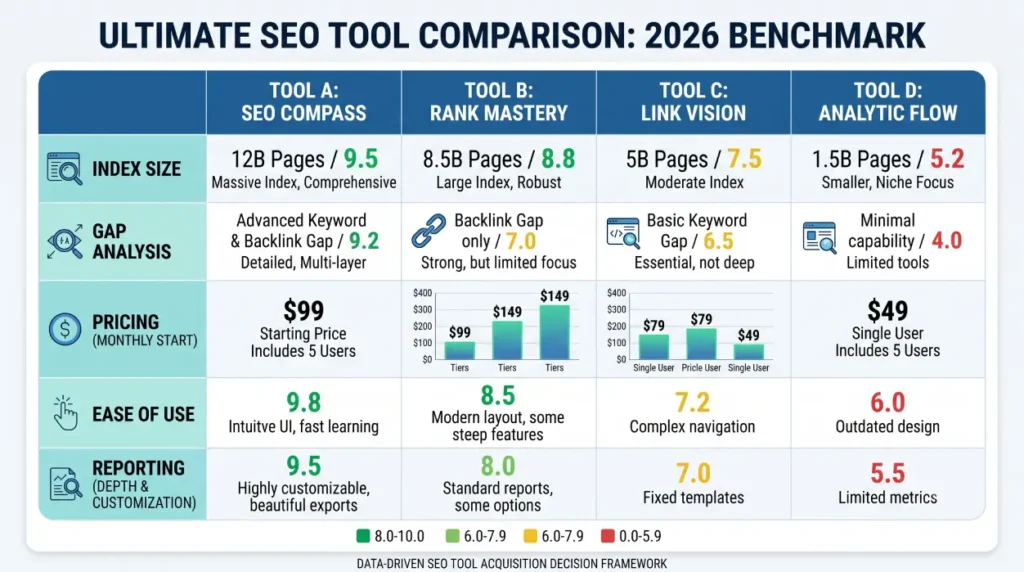
Not all tools are built equally. Some prioritize index size. Others prioritize freshness or accuracy. Your choice depends on what your business actually needs.
Ahrefs leads in index size with over 35 trillion known links, making it ideal for SaaS companies targeting global keywords. Semrush offers stronger competitive intelligence dashboards — a favorite among affiliate asset owners and e-commerce teams running multi-brand operations.
Moz suits B2B founders who need simpler reporting for stakeholder presentations.
For budget-conscious teams, competitor backlink checker tools like Ubersuggest or SE Ranking offer functional gap reports at a fraction of enterprise pricing. They’re not perfect, but they’re a legitimate starting point.
The key features to prioritize in any competitor backlink analysis tool include: Referring domain filters by niche, country, and domain rating
Gap comparison mode supporting 3+ competitor domains simultaneously
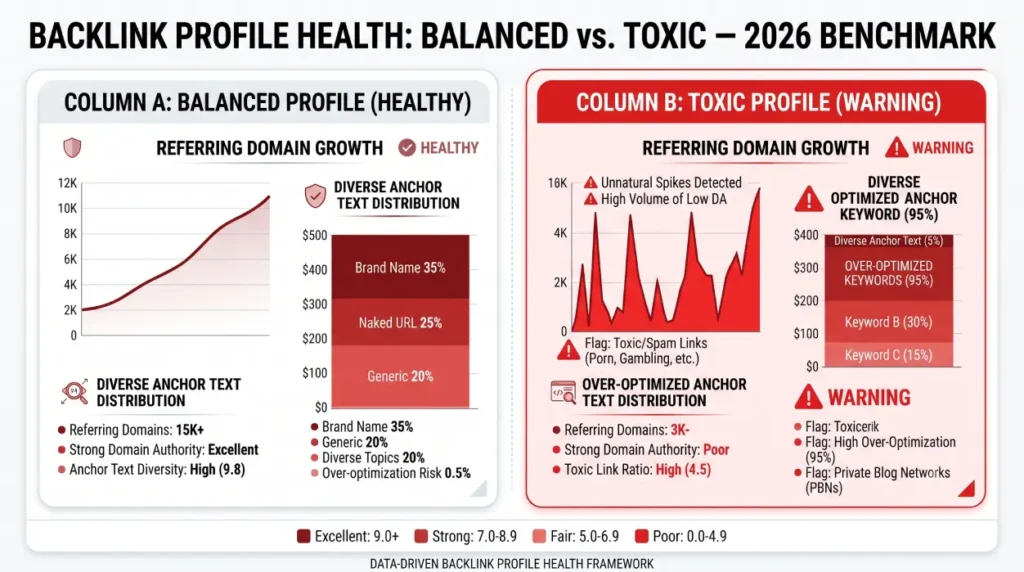
Anchor text distribution breakdowns to detect over-optimization risks
Link velocity tracking to spot sudden spikes (earned or bought)
If you’d rather have experts handle this process for you, our Modern Anchor Text Optimization Blueprint | Rank Smarter in 2026 provides a proven, white-hat approach designed to deliver sustainable long-term results.
4. Step-by-Step: Running Your First Backlink Gap Analysis
Marcus’s first gap analysis took him 40 minutes. Yours might take less. Here’s the exact process.
Step 1 — Identify 3–5 real competitors. Don’t pick industry giants like HubSpot if you’re a 10-person SaaS. Pick companies ranking on pages 1–2 for your target keywords with similar domain authority scores.
Step 2 — Enter all domains into your chosen tool’s gap analysis feature. Semrush calls it “Backlink Gap.” Ahrefs calls it “Link Intersect.” Both produce the same core output: a filtered list of domains linking to competitors but not to you.
Step 3 — Filter for quality, not quantity. Sort by domain rating (DR 40+ is a reasonable starting threshold), relevance score, and traffic. A link from a dormant DR 70 forum means far less than a link from an active DR 50 industry blog.
Step 4 — Categorize your targets. Separate them into guest post opportunities, resource page mentions, product review sites, podcast show notes, and directory listings. Each category needs a different outreach approach.
Step 5 — Start your outreach log. Track domain, contact name, outreach date, and outcome. Most serious link builders use Airtable or Notion for this. Consistency over 60 days builds compounding results.
5. Turning Gap Data Into a Link Building Strategy
Data without action is just a spreadsheet. The real win comes from converting gap insights into structured link acquisition campaigns.
Start with “low-hanging fruit” — resource pages and industry directories that already link to 3+ of your competitors.
These are the highest-probability targets because the site owner has already demonstrated a pattern of linking within your niche. A brief, personalized email with a clear value reason converts well here.
Then move to content-driven gap plays. If three competitors earned links from a TechCrunch article mentioning “best project management tools,” you need to earn a mention in the next similar roundup. That means building Authority Optimization equity — having a polished brand page, clear differentiation, and media-ready quotes ready to go.
So don’t just pitch. Build authority first, then pitch. The sequence matters enormously.
If you’re looking for a more detailed, step-by-step approach, our Identifying and Avoiding Spammy Link Networks | How to Audit Clean Backlinks guide covers everything you need to implement this strategy effectively.
6. Protecting Your Domain While You Build
But here’s what many guides skip entirely: link building done carelessly can hurt you.
[[Domain protection]] isn’t just a technical term — it’s the practice of maintaining a healthy backlink profile while you aggressively acquire new links.
Google’s Penguin algorithm has historically penalized sites with sudden, unnatural link spikes, particularly when anchor text over-indexes on exact-match keywords.
As you build, monitor your Domain protection signals monthly: toxic link score, anchor text ratio, and referring domain diversity. Tools like Semrush’s Backlink Audit or Ahrefs’ Site Explorer flag risky links before they become a penalty.
And if you’re running a disavow campaign alongside new link building — which some e-commerce sites recovering from past spam tactics must do — sequence it carefully. Remove toxic links before aggressively adding new ones.
Can you build links and clean your profile simultaneously? Yes. But treat them as two separate workflows with separate KPIs.
If you’re ready to take the next step, our comprehensive Safe Link Velocity Rules for New Websites | Link Building Guide walks you through the strategies, tools, and best practices professionals use to achieve consistent organic growth.
The Map Was There the Whole Time
Marcus didn’t invent new content formats or spend thousands on ads. He simply used a competitor backlink analysis tool to find where his competitors were winning — and systematically went after the same opportunities with better execution.
Three takeaways to carry forward:
- Gap data beats guesswork. Running a competitor backlink checker analysis once a quarter gives you a continuously updated list of high-value targets.
- Competitor backlinks are a proven map. Sites already linking to your rivals are warm prospects — they understand your space and link within it.
- Protect while you build. Authority Optimization and Domain protection aren’t optional extras — they’re what makes link building sustainable.
The gap between you and your top competitor isn’t talent. It’s not budget. It’s intelligence. And now you have it.
The right strategy doesn’t just improve rankings—it builds long-term authority, trust, and sustainable organic growth. Continue exploring the resources below to strengthen every aspect of your SEO strategy.
Ready to close the gap faster than you could alone? [Order our Premium Link Building Service Now and let our team execute your competitor backlink strategy from gap analysis to live links.
FAQ
Q: What is a competitor backlink analysis tool used for?
A: A competitor backlink analysis tool helps you identify which websites are linking to your competitors but not to you. This gap data reveals high-value link opportunities you can target to improve your own search rankings and domain authority.
Q: How often should I run a competitor backlink gap analysis?
A: Most SEO professionals recommend running a backlink gap analysis every 60–90 days. If you’re in a fast-moving niche like SaaS or e-commerce, monthly reviews help you catch new link sources before competitors lock them in.
Q: Which competitor backlink checker tool is best for small businesses?
A: For small businesses or early-stage SaaS teams, SE Ranking and Ubersuggest offer affordable competitor backlink checker functionality. For deeper data and accuracy, Ahrefs and Semrush remain the industry standard despite their higher price points.
Q: Can competitor backlink analysis hurt my SEO if done incorrectly?
A: The analysis itself doesn’t carry risk — but acting on it incorrectly can. Acquiring links too quickly, using exact-match anchor text excessively, or chasing low-quality domains from a competitor’s profile can trigger algorithmic red flags. Always filter for quality and pace your acquisition.
Q: What’s the difference between a backlink gap and a keyword gap?
A: A keyword gap shows which search terms your competitors rank for that you don’t. A backlink gap shows which external websites link to your competitors but not to you. Both analyses complement each other — keyword gaps tell you where to create content, and backlink gaps tell you how to earn authority for that content.