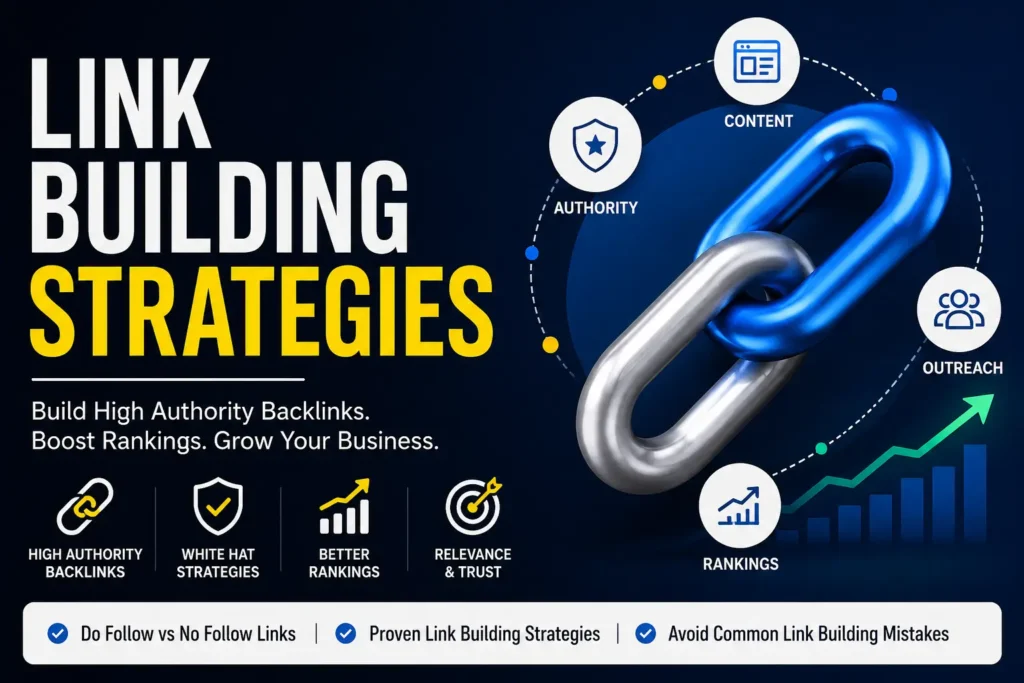
Link Building Strategies: The Definitive Guide to Building High Authority Backlinks in 2026
Why Does Link Building Still Matter?
Link building is still one of the most important ranking factors in modern search engines. Search engines use high-quality backlinks to assess trust, authority, relevance, and topical expertise.
Despite advances in AI-powered search, semantic understanding, and Generative Engine Optimisation (GEO), backlinks continue to influence visibility in both traditional search results and AI-generated answers.
Links are used by search engines as a signal of credibility. When reputable websites link to your content, they effectively send trust signals that boost your domain’s authority.
Businesses that consistently earn quality backlinks usually achieve:
- Higher organic rankings
- Faster indexing
- Increased referral traffic
- Stronger brand authority
- Better AI search visibility
The challenge is no longer to acquire links. The challenge is acquiring the appropriate links.
What exactly is link building?
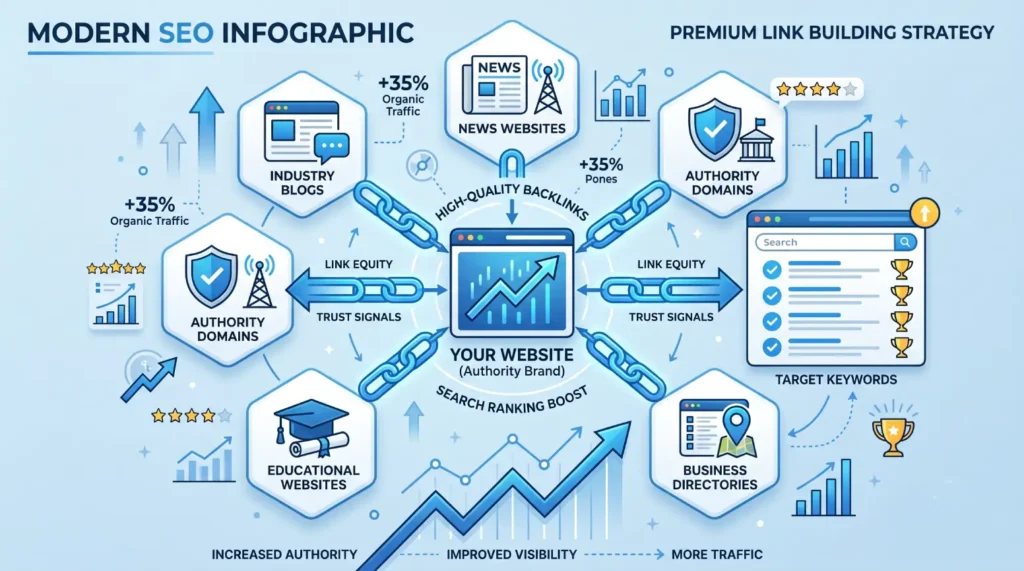
Link building is the process of acquiring hyperlinks from other websites that point to your own. These links serve as endorsements for search engines, allowing them to determine authority and relevance.
A backlink performs two primary functions.
- It helps users discover content.
- It helps search engines measure trust.
Not all links are equally valuable.
A backlink from an established industry publication often delivers significantly more SEO value than dozens of links from low-quality websites.
Modern Link Building focuses on relevance, authority, and editorial integrity rather than volume.
How Search Engines Evaluate Backlinks
Search engines analyse multiple factors before assigning value to a backlink. Authority alone is not enough. Context and relevance matter equally.
Key evaluation factors include the following:
Domain Authority
Websites with strong authority generally pass more ranking signals.
Examples include:
- Major news publications
- Industry-leading blogs
- Educational institutions
- Government websites
Topical Relevance
A fashion manufacturing website benefits more from links on fashion-related websites than links from unrelated industries.
Context strengthens trust.
Editorial Placement
Links placed naturally within content often provide more value than links located in sidebars, footers, or author boxes.
Traffic Signals
Search engines increasingly evaluate whether links generate real user engagement and referral traffic.
Link Velocity
A natural growth pattern appears more trustworthy than sudden spikes generated through aggressive campaigns.
Types of Backlinks That Matter
The highest-performing backlinks originate from trusted, relevant, and editorially controlled websites.
Editorial Backlinks
These occur when publishers voluntarily cite your content.
Benefits include:
- High trust signals
- Strong ranking impact
- Long-term value
Guest Post Backlinks
Publishing expert content on industry websites remains one of the most effective White Hat Link Building methods.
The emphasis should remain on quality publications rather than quantity.
Resource Page Links
Many websites maintain curated resource pages.
If your content solves a problem or provides valuable information, it can earn placement on these pages.
Digital PR Links
Digital PR combines public relations and SEO.
Examples include:
- Industry reports
- Original research
- Data studies
- Expert commentary
These assets often attract links naturally from journalists and publishers.
Niche Citations
Local businesses and specialised industries benefit from niche-specific directory listings and professional associations.
White Hat Link Building vs Black Hat Link Building
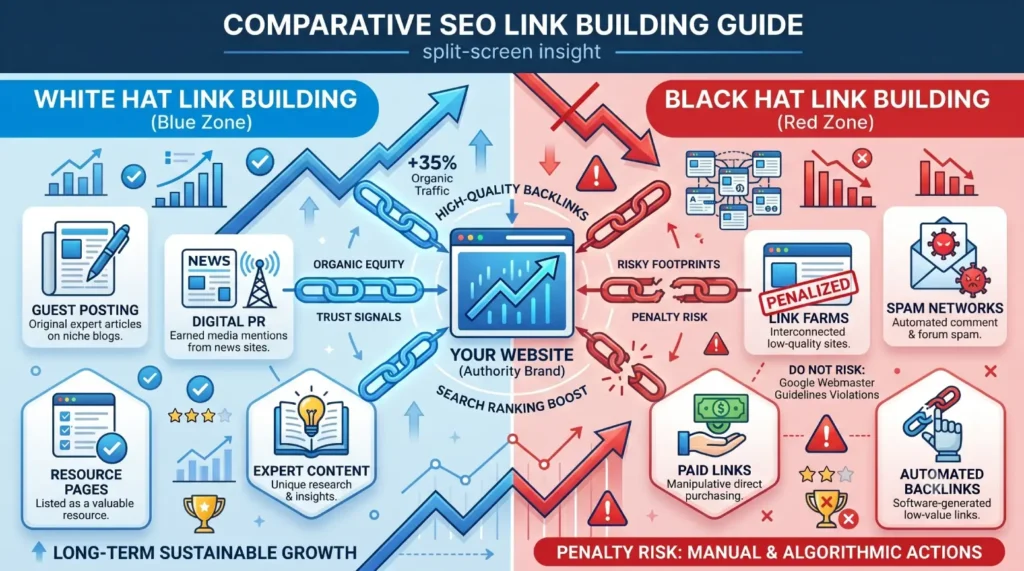
White Hat Link Building follows search engine guidelines. Black Hat Link Building attempts to manipulate rankings through artificial methods.
| White Hat Link Building | Black Hat Link Building |
| Editorial outreach | Private blog networks |
| Digital PR | Link schemes |
| Resource promotion | Automated backlinks |
| Expert contributions | Paid spam links |
| Original research | Link farms |
White Hat strategies create sustainable rankings.
Black Hat tactics may produce temporary gains but often result in ranking losses, manual actions, or algorithmic penalties.
Businesses focused on long-term growth should avoid manipulative link acquisition methods.
The Most Effective Link-Building Strategies for 2026
The best link-building strategies prioritise value creation before outreach. Websites earn stronger links when they provide unique information, tools, or expertise.
1. Original Research Campaigns
Data attracts links.
Publish:
- Industry surveys
- Benchmark reports
- Trend analyses
- Market research
Journalists frequently cite proprietary data.
This creates natural opportunities for high-authority backlinks.
2. Expert Roundups
Gather insights from industry professionals.
Benefits include:
- Relationship building
- Social amplification
- Natural backlink opportunities
Participants often reference and share the published content.
3. Strategic Guest Posting
Guest posting remains effective when executed correctly.
Focus on:
- Relevant publications
- High editorial standards
- Genuine expertise
Avoid mass-produced guest post campaigns.
Quality consistently outperforms quantity.
4. Broken Link Building
Identify broken outbound links on relevant websites.
Replace outdated resources with your own content.
The process involves:
- Finding broken links.
- Creating a suitable replacement.
- Contacting the website owner.
This strategy delivers value to both parties.
5. Resource Link Acquisition
Create content worthy of inclusion in industry resource lists.
Examples include:
- Ultimate guides
- Templates
- Checklists
- Research reports
Resource pages often maintain backlinks for years.
6. HARO and Expert Commentary Platforms
Journalists constantly seek expert opinions.
Providing expert insights can generate backlinks from major publications.
These links often carry substantial authority.
High Authority Backlinks: What Makes Them Valuable?
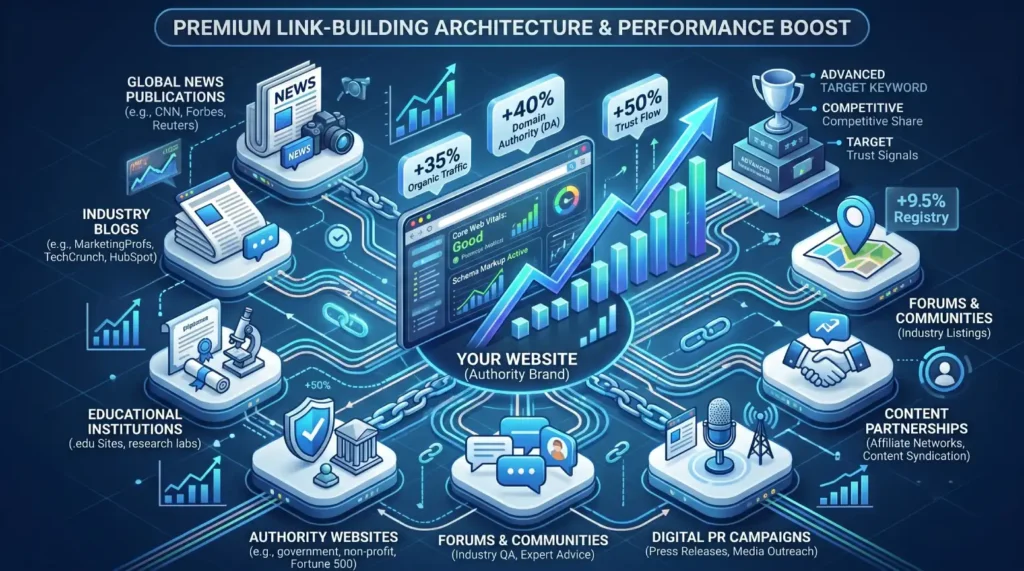
High Authority Backlinks originate from trusted websites with strong reputations, established audiences, and editorial oversight.
Characteristics include:
- Relevant topic alignment
- Genuine editorial placement
- Real traffic
- Strong domain reputation
- Natural anchor text
A single authoritative backlink can outperform dozens of weak links.
For example:
A backlink from a respected fashion industry publication often delivers more ranking value than fifty links from low-quality directories.
This principle explains why modern SEO focuses heavily on quality rather than volume.
DoFollow vs NoFollow Links
Do Follow links pass ranking signals? No Follow links generally do not transfer traditional authority signals, although they may still provide visibility and traffic benefits.
Do Follow Links
Characteristics:
- Pass authority
- Influence rankings
- Strengthen domain credibility
Most editorial backlinks fall into this category.
No Follow Links
Characteristics:
- Limited direct ranking influence
- Useful for referral traffic
- Support natural link profiles
Examples include:
- Social media links
- Forum links
- Certain news comments
- Sponsored placements
Which Is Better?
A natural backlink profile includes both.
An exclusively Do Follow profile often appears unnatural.
Search engines expect diversity.
The goal is not maximising Do Follow percentages.
The goal is earning authentic links from credible sources.
Link Building Mistakes That Destroy SEO Performance
Most link-related penalties result from aggressive shortcuts rather than strategic execution.
Buying Low-Quality Links
Cheap backlink packages often originate from the following:
- Link farms
- Automated networks
- Spam websites
These links frequently create more risk than value.
Over-Optimized Anchor Text
Repeated keyword anchors appear manipulative.
Example:
Using “best Link Building agency” hundreds of times creates an unnatural pattern.
Natural anchor distribution should include:
- Brand names
- URL anchors
- Generic anchors
- Partial-match anchors
Ignoring Relevance
Authority without relevance provides limited value.
A technology backlink rarely helps a fashion manufacturing website as much as a fashion industry backlink.
Prioritizing Quantity Over Quality
Many businesses still measure success by link count.
Search engines evaluate link quality, context, and trustworthiness.
More links do not automatically mean better rankings.
Building Links to Weak Content
Poor content rarely earns sustainable backlinks.
Before investing in outreach, strengthen:
- Content depth
- Original insights
- Visual assets
- User experience
Strong content improves acquisition rates significantly.
Building a Modern Link Building Framework
Successful Link Building requires a repeatable system rather than isolated campaigns.
A practical framework includes four stages.
Stage 1: Content Asset Development
Create link-worthy assets, such as:
- Research studies
- Industry guides
- Interactive tools
- Original datasets
Stage 2: Prospect Identification
Identify:
- Industry blogs
- Publications
- Resource pages
- Journalists
- Influencers
Relevance remains the primary selection criterion.
Stage 3: Outreach Execution
Personalised outreach consistently outperforms mass email campaigns.
Effective outreach should:
- Reference specific content
- Explain value clearly
- Remain concise
Editors receive hundreds of pitches each week.
Precision matters.
Stage 4: Performance Analysis
Monitor:
- Referring domains
- Link quality
- Referral traffic
- Ranking improvements
- Conversion impact
Continuous analysis improves future campaigns.
How GEO Changes Link Building
Generative Engine Optimisation (GEO) expands the role of backlinks beyond traditional search rankings.
AI-powered search systems increasingly evaluate the following:
- Brand authority
- Entity recognition
- Expert citations
- Trust signals
- Source credibility
High-quality backlinks strengthen these signals.
When authoritative websites consistently mention and reference a brand, AI systems gain stronger confidence in that brand’s expertise.
This creates visibility opportunities across:
- AI search engines
- Answer engines
- Conversational interfaces
- Traditional search results
The future of Link Building extends beyond ranking pages.
It supports broader digital authority.
Measuring Link Building Success
The most important metric is business impact, not backlink volume.
Key performance indicators include:
| Metric | Why It Matters |
| Referring Domains | Measures authority growth |
| Organic Traffic | Indicates ranking improvement |
| Keyword Visibility | Tracks search presence |
| Referral Traffic | Shows user engagement |
| Brand Mentions | Supports GEO visibility |
| Lead Generation | Connects SEO to revenue |
Organisations that focus exclusively on backlink counts often miss the larger objective.
The goal is business growth.
Links are the mechanism, not the destination.
The Future of Link Building
Search algorithms continue evolving, but trusted recommendations remain fundamental to information discovery.
Future Link Building trends include the following:
- Greater emphasis on topical authority
- Stronger entity-based evaluation
- Increased value of digital PR
- AI-assisted prospecting
- Brand citation growth
- Content-led link acquisition
The websites that earn attention through expertise, research, and credibility will continue attracting links naturally.
Those signals will remain valuable across both search engines and AI-powered discovery platforms.
Key Takeaways
✔ Link Building remains a major ranking factor in SEO and GEO.
✔ White Hat Link Building creates sustainable long-term growth.
✔ High Authority Backlinks outperform large volumes of weak links.
✔ Relevance matters as much as authority.
✔ A balanced Do Follow vs No Follow Links profile appears natural.
✔ Original research and digital PR generate the strongest backlinks.
✔ Avoid link-building mistakes such as buying spam links and over-optimising anchor text.
✔ Modern Link Building Strategies focus on expertise, trust, and editorial quality.
FAQ (frequently asked questions)
1. What is Link Building in SEO?
Link building is the process of acquiring backlinks from other websites in order to increase a site’s authority, trust, and search engine rankings. Quality backlinks help search engines recognise your content as valuable and credible.
2. Are High Authority Backlinks More Effective Than Hundreds of Low-Quality Links?
Yes. A few High Authority Backlinks from relevant and trustworthy websites can often provide more SEO value than hundreds of low-quality backlinks. Quality, relevance, and trust are more important to modern search algorithms than link quantity.
3. What Is the Difference Between Do Follow and No Follow Links?
Do Follow links send authority signals that can influence rankings, whereas No Follow links do not convey traditional ranking value. However, No Follow links can still drive referral traffic, increase brand visibility, and help build a natural backlink profile.
4. Does Guest Posting Still Work for Link Building?
Yes. Guest posting is still one of the most effective White Hat Link Building strategies when published on relevant, authoritative websites with high editorial standards. Quality is more important than quantity when it comes to guest posts.
5. What are the most common link-building mistakes?
Common Link Building Mistakes include purchasing spam links, using private blog networks (PBNs), over-optimizing anchor text, ignoring topical relevance, and putting quantity ahead of quality. These practices can lower rankings and increase penalties.